Warning signs
Signs Your Crawl Space Has Moisture Damage
Moisture problems often show up as odors, wet insulation, damaged liner material, or soft floors before a homeowner sees the source directly.
Disclosure: Gastonia Crawl Space Repair Help is an independent lead-generation website. We do not perform contractor services directly. Requests may be connected with a local service provider.
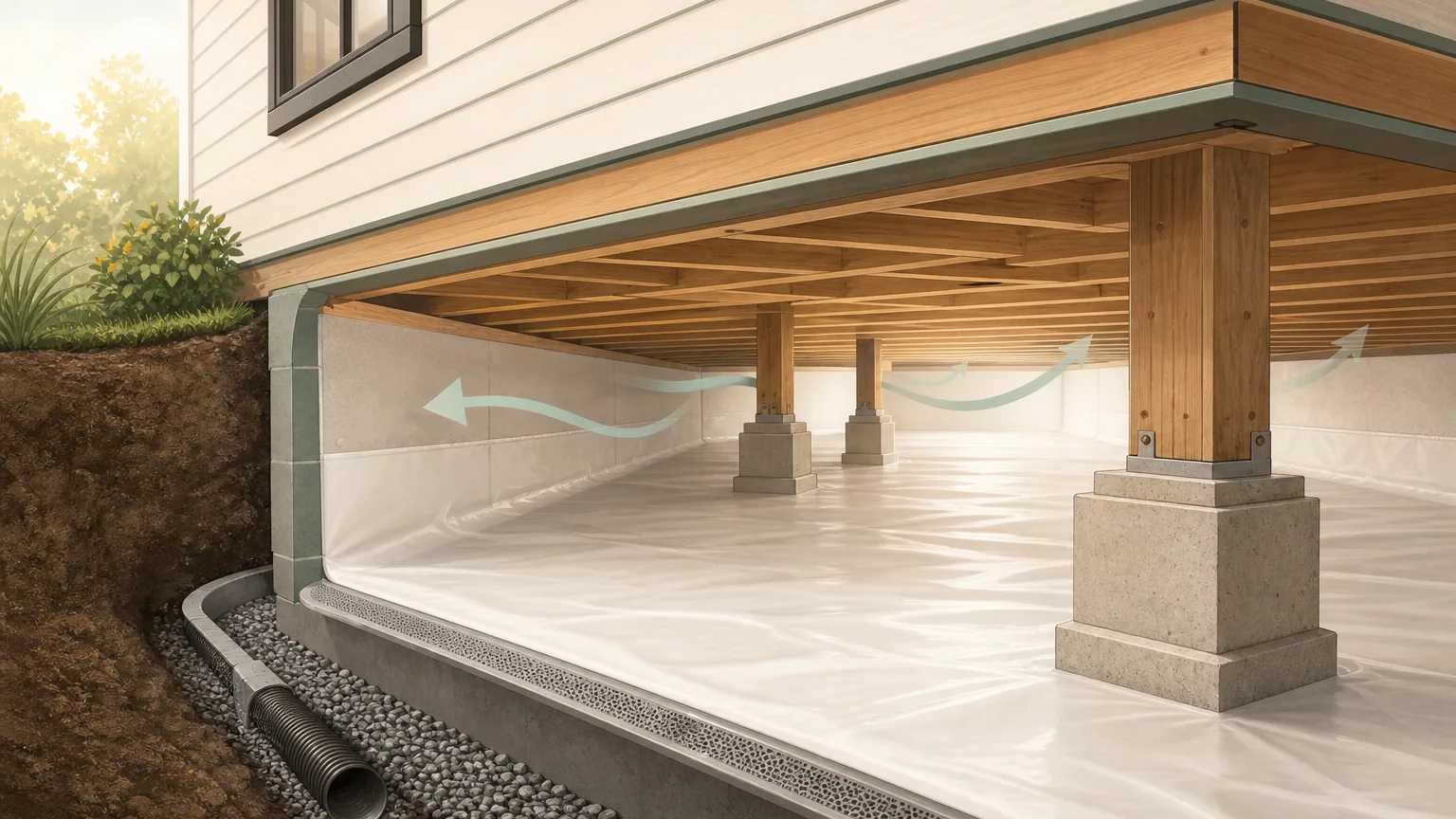
Homeowner request path
Gastonia, NC- Share the crawl space issue you are seeing.
- Choose repair, encapsulation, moisture, drainage, or support help.
- Get connected with a local provider when available.
Warning signs to take seriously
- Musty smells near floor vents, closets, or first-floor rooms.
- Condensation, damp soil, or standing water under the home.
- Wet, fallen, dirty, or odor-holding insulation.
- Torn, missing, thin, muddy, or floating vapor barrier material.
- Soft, bouncy, uneven, or sagging floors above the crawl space.
- Visible staining, darkened wood, or suspected organic growth.
- Pest activity or debris collecting in damp areas.
How the signs connect to service pages
Standing water often starts with drainage and water control. Odors and damp air may need moisture control. Torn liner material points toward vapor barrier help. Soft floors or damaged framing may need crawl space repair.
What to tell a provider
Share the first symptom you noticed, when it happens, whether it gets worse after rain, and whether you can see water, damaged insulation, a torn vapor barrier, or floor movement. Photos from the access opening can help without putting you under the home.
Helpful homeowner guidance
What the evidence says before you hire
The safest version of this page helps homeowners identify symptoms without pretending to diagnose mold, structure, or code issues from a website visit.
- EPA guidance emphasizes moisture control as the starting point for mold prevention in homes.
- A North Carolina crawl-space study found measurable mold-spore transmission from some crawl spaces into living areas.
- A clear request should separate active water, vapor barrier condition, odor signals, insulation condition, and floor-support symptoms before routing the request.
Sources: EPA mold and moisture guide, North Carolina crawl-space mold study
Disclosure: Gastonia Crawl Space Repair Help is an independent lead-generation website. We do not perform contractor services directly. Requests may be connected with a local service provider.
Inspection request
Describe the symptom you noticed first
A clear request should include odor, water, vapor barrier, insulation, and floor symptoms. That helps a local provider understand the likely scope before calling.
Common homeowner questions
What are the most common signs of crawl space moisture damage?
Common signs include musty odors, damp soil, standing water, torn vapor barrier material, wet insulation, visible wood staining, pest activity, and soft or uneven floors above the crawl space.
Can crawl space moisture affect the rooms above it?
Yes. Odors, humidity, and floor-support symptoms can show up upstairs when moisture remains under the home. A provider can inspect the crawl space and identify likely moisture sources.
Does a musty smell mean I have mold?
A musty smell can point to damp materials or organic growth concerns, but this page does not diagnose mold. A qualified provider can inspect the area and explain whether cleanup, moisture control, or repair is needed.
When should I request crawl space help?
Request help when moisture signs return after rain, insulation is wet or falling, wood looks stained or damaged, floors feel soft, or the crawl space smells musty from inside the home.