Urgent water guide
Emergency Crawl Space Water Problems After Heavy Rain in Gastonia
Water under the house can move from nuisance to damage quickly. Start with safety, document what changed, then request help before the next storm repeats it.
Disclosure: Gastonia Crawl Space Repair Help is an independent lead-generation website. We do not perform contractor services directly. Requests may be connected with a local service provider.
Homeowner request path
Gastonia, NC- Share the crawl space issue you are seeing.
- Choose repair, encapsulation, moisture, drainage, or support help.
- Get connected with a local provider when available.
Start safely
Do not crawl through standing water
Standing water can hide sharp debris, pests, weak flooring, and electrical hazards. If you see water near wiring, mechanical equipment, sparking, or immediate danger, stay out and contact the appropriate utility, emergency service, or licensed professional first.
What to document from the access opening
- Whether the water is standing, flowing, or only damp soil.
- Which side of the house looks wettest after rain.
- Whether gutters, downspouts, slopes, or low spots drain toward the foundation.
- Whether insulation is wet, fallen, or holding odor.
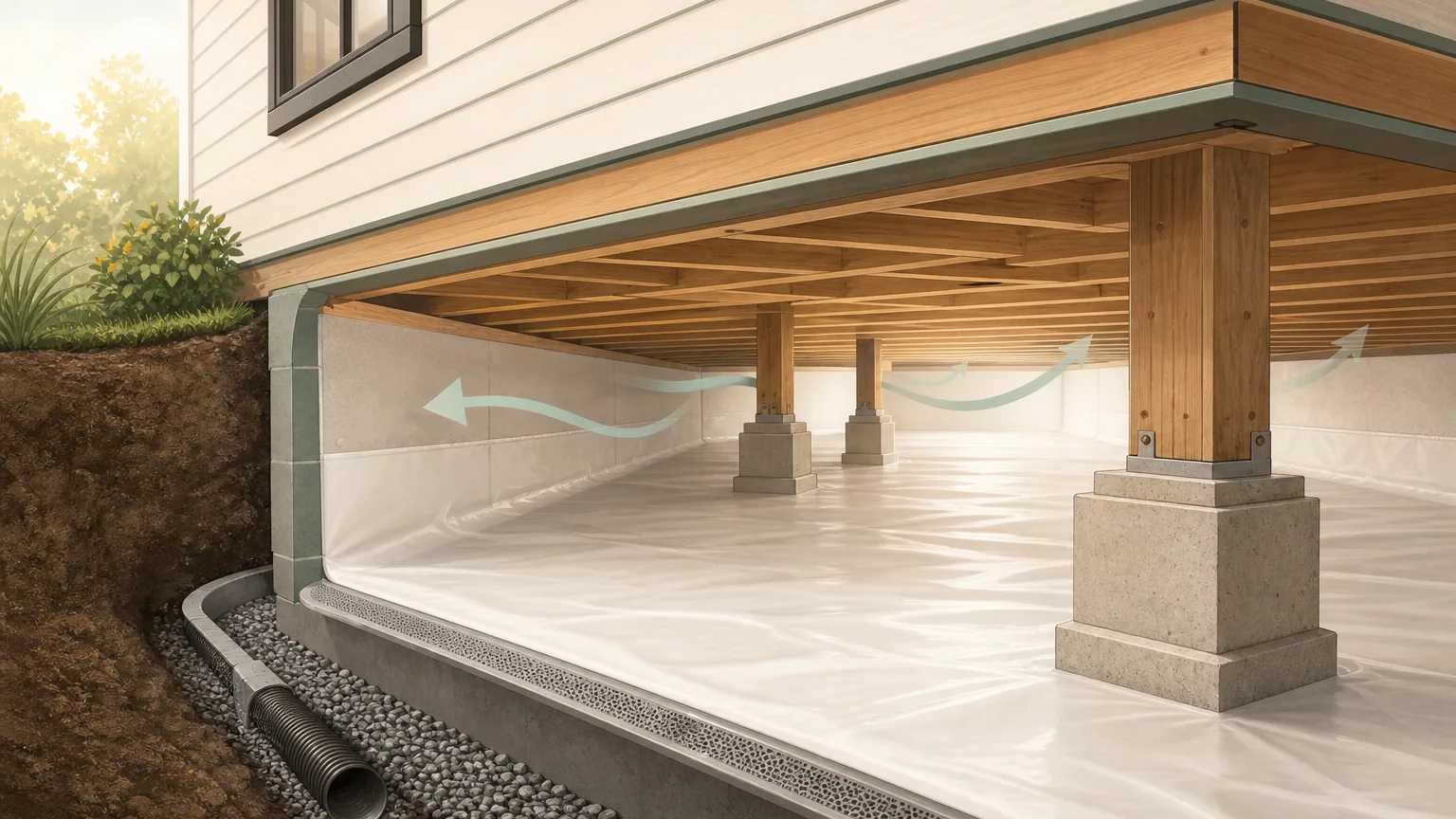
- Whether the vapor barrier is missing, torn, floating, or covered with mud.
- Whether floors above feel soft, bouncy, or uneven.
What a crawl-space provider may check
A provider can look at exterior drainage, grading, crawl-space access, vapor barrier condition, insulation, visible wood concerns, low spots, and whether water control needs to happen before repair or encapsulation.
Helpful next pages
Compare related issues on drainage and standing water, moisture control, vapor barrier help, and cost factors.
Helpful homeowner guidance
What the evidence says before you hire
The points below explain why quick documentation, safe distance, and moisture details matter before requesting help.
- EPA guidance starts mold prevention with moisture control and recommends drying water-damaged areas within 24-48 hours.
- A clear request should separate active water, vapor barrier condition, odor signals, insulation condition, and floor-support symptoms before suggesting next steps.
- A North Carolina crawl-space study found measurable mold-spore transmission from some crawl spaces into living areas, which is one reason moisture problems should not be ignored.
Sources: EPA mold and moisture guide, North Carolina crawl-space mold study
Disclosure: Gastonia Crawl Space Repair Help is an independent lead-generation website. We do not perform contractor services directly. Requests may be connected with a local service provider.
Water problem request
Send the rain and water details
Include when the water appeared, where it collects, whether it comes back after every storm, and whether insulation, wood, or the vapor barrier looks affected.
Common homeowner questions
What should I do first if water appears in my crawl space after heavy rain?
Stay out of standing water, take photos from the access opening if safe, note when the water appeared, and request help from a crawl-space provider who can review drainage, vapor barrier condition, and moisture sources.
Is crawl space water always an emergency?
Not always. Water that is touching electrical equipment, causing active structural damage, blocking safe access, or returning after every storm deserves faster attention. A provider can help separate urgent safety issues from planned repair work.
Can I pump water out myself?
Avoid entering a wet crawl space or using equipment near wiring unless a qualified professional has confirmed it is safe. Share photos and details from a safe location first.
What details help a provider understand the water problem?
Helpful details include when the water appears, whether it is standing or damp soil, whether gutters or downspouts discharge nearby, whether insulation is wet, and whether a sump pump or vapor barrier is already present.